A translated document can become outdated the moment someone edits the source. The risk is especially easy to miss when the change looks small: a new location, a revised instruction, a replacement link, or a different deadline. A coordinated release treats each language version as part of one publication and gives changes an owner.
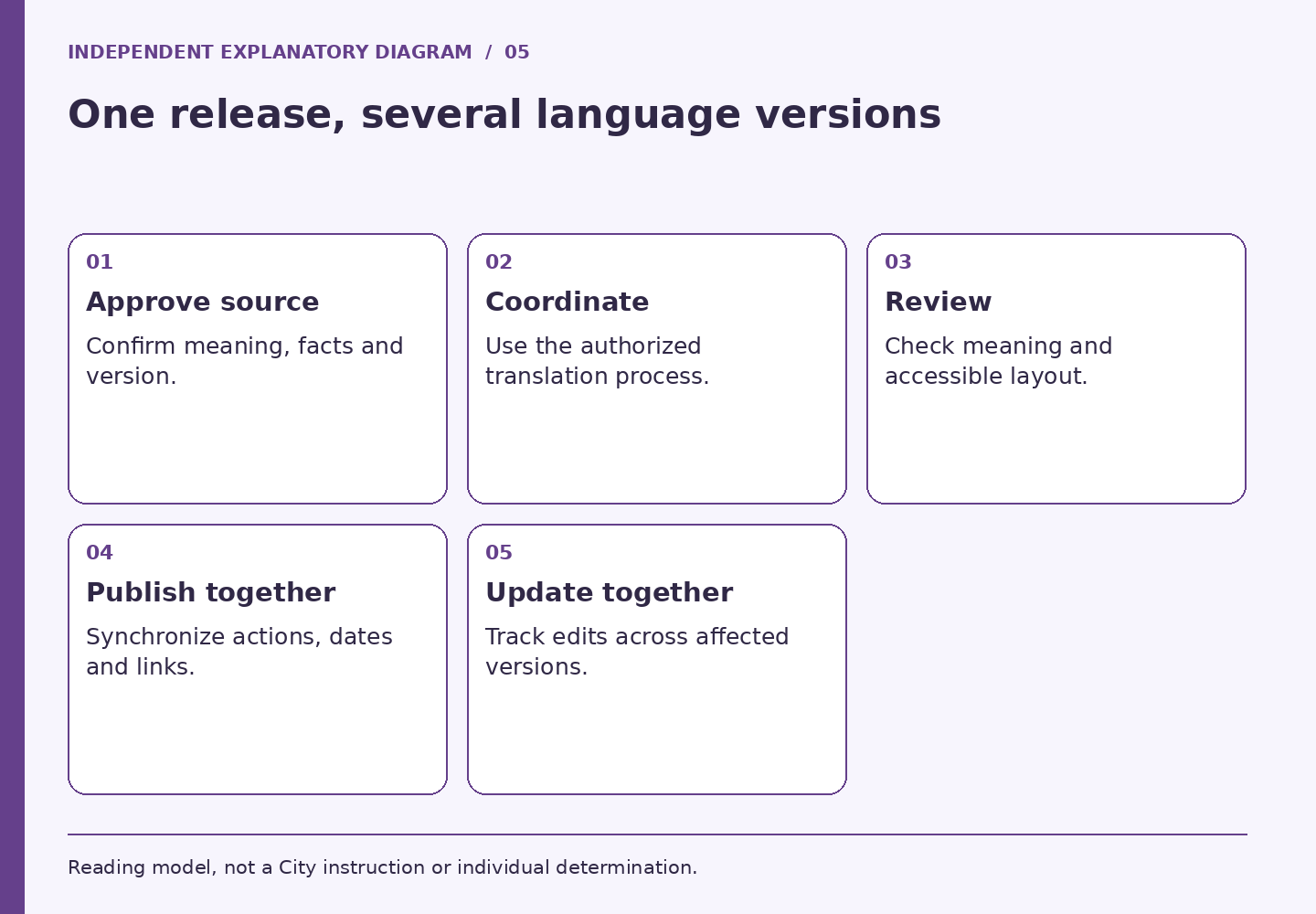
Boston's LCA Hub links staff to glossaries, notices, and communication resources. The public LCA page distinguishes written translation from live interpretation. Use the current official process for commissioning or approving translations; this guide provides an independent version-control exercise rather than a vendor workflow or authorization to spend funds. Boston LCA Hub: Key Documents Boston: Language and Communications Access
Stabilize the source before requesting work
Confirm the source's audience, purpose, required action, and owner. Resolve ambiguous pronouns, unexplained abbreviations, and conflicting dates before the text moves forward. Clearly label the version that is approved for translation. If essential facts remain uncertain, identify them instead of letting a placeholder look final.
Create a compact release register. For each version, record the source version, language, responsible reviewer, format, status, and publication destination. Keep personal data out of the register. Its purpose is to track the document, not the people who may need it.
Separate meaning review from layout review
A translation needs an appropriate review of meaning through the authorized process. It also needs a delivery review: does the final layout display correctly, preserve the hierarchy, and keep links or form instructions usable? These are different tasks, and one does not prove the other is complete.
In a fictional outreach notice, the English source contains a three-step process. The translated design moves the second step onto another page and visually separates its condition from its instruction. Even if the words are accurate, the layout may make the task harder to follow. The publication owner should return the issue to the relevant reviewer rather than editing unfamiliar-language text by guesswork.
Treat every source change as a release decision
Suppose the event location changes after several language versions are ready. Record precisely what changed and ask the coordinator which versions and formats are affected. Update the webpage, download, invitation, and any reusable notice where the old location remains. A single corrected file does not help people still arriving through an earlier link.
Do not silently substitute automatic translation for the approved process in a high-consequence notice. If time is short, escalate the timing and access problem to the responsible office. The publication should state only arrangements that the owner can actually provide and support.
Run a synchronized-release check
- Every published version points to the same current event or service
- Dates, locations, actions, and contact routes match the approved source
- Each file has a recognizable title and version
- Links open the intended destination and do not require unexpected access
- The owner knows how a correction will reach all affected versions
After release, retain the approved source and change history under the organization's normal records practices. Do not invent a separate retention period from this guide. When feedback identifies an unclear translation or layout issue, route it to the appropriate reviewer and track the corrected version through publication. The goal is dependable communication across versions, not merely a count of translated files.
LOCAL READING AID / NO PERSONAL INPUT
Participation Readiness Map
Choose a work product and the stage of participation. Get a practical plan, focused review questions, and a route to the official source. No personal information is requested.
Read the method without JavaScript
Choose a work product and the stage of participation. Get a practical plan, focused review questions, and a route to the official source. No personal information is requested.
- Boston: Language and Communications Access: Define every participation activity, including questions and follow-up. Assign owners for the venue route, materials, communication arrangements, and live troubleshooting. Check current departmental LCA steps before committing funds.
- Massachusetts Office on Disability: Tips for hosting accessible events and meetings: Test a room question reaching a remote participant and a remote contribution reaching the room. Test shared files, communication supports, and the breakout activity with a participant account. Name who can pause the session and invoke the agreed fallback.
- Massachusetts Office on Disability: Creating accessible digital documents: Confirm the approved audience, required action, version, and owner. Review structure, meaningful links, and non-text content in the editable source. Reopen the exported file and test the actual distribution link.
- Boston: Language Access Information and Services: Separate live conversation needs from written-material needs. Provide the authorized coordinator with the format, activity, timing, and approved materials. Track source edits across every affected language version and delivery format.
- W3C WAI: Understanding Media Alternative (Prerecorded): Inventory what the lesson communicates through speech, sound, and visuals. Review captions for instruction-changing errors and identify visual meaning absent from the audio. Check the player, companion files, version, and support route as one package.
- City of Boston Employee Handbook: Policies and Procedures: Identify whether this is an employee workplace process, a City-program question, or an operational defect. Use the appropriate official channel for personal supporting information. Assign a repair owner and choose a test that matches the reported participation failure.
Choices stay in page memory. No submission, tool storage or URL change. Browser-managed form restoration may behave independently. External source links follow their own policies. Source context checked October 7, 2026.
Sources and scope
Public sources checked October 7, 2026. The exercises and fictional cases are independent editorial work. This publication cannot certify accessibility, decide an accommodation, or act for the City.
- Boston LCA Hub: Key Documents: Babel notices, accommodation notices, glossaries, communication guide, and project funding-process information.
- Boston: Language and Communications Access: Office remit; interpretation, translation, assistive technology; links to employee training.