A room can look comfortable in a booking photograph while the route to it presents problems. The useful planning question is how a participant gets from arrival to every part of the activity and back out again. A walkthrough should produce observations and assigned follow-up, not a self-issued accessibility certificate or an amateur building-code judgment.
Boston's Disabilities Commission provides architectural-access guidance to City departments and links to a meeting-and-event accessibility checklist. Its broader mission addresses procedural and communication barriers as well as physical ones. Use the official resources and appropriate facilities expertise for requirements; use the exercise below to notice what a room reservation can miss. Boston: Disabilities Commission
Follow a real sequence
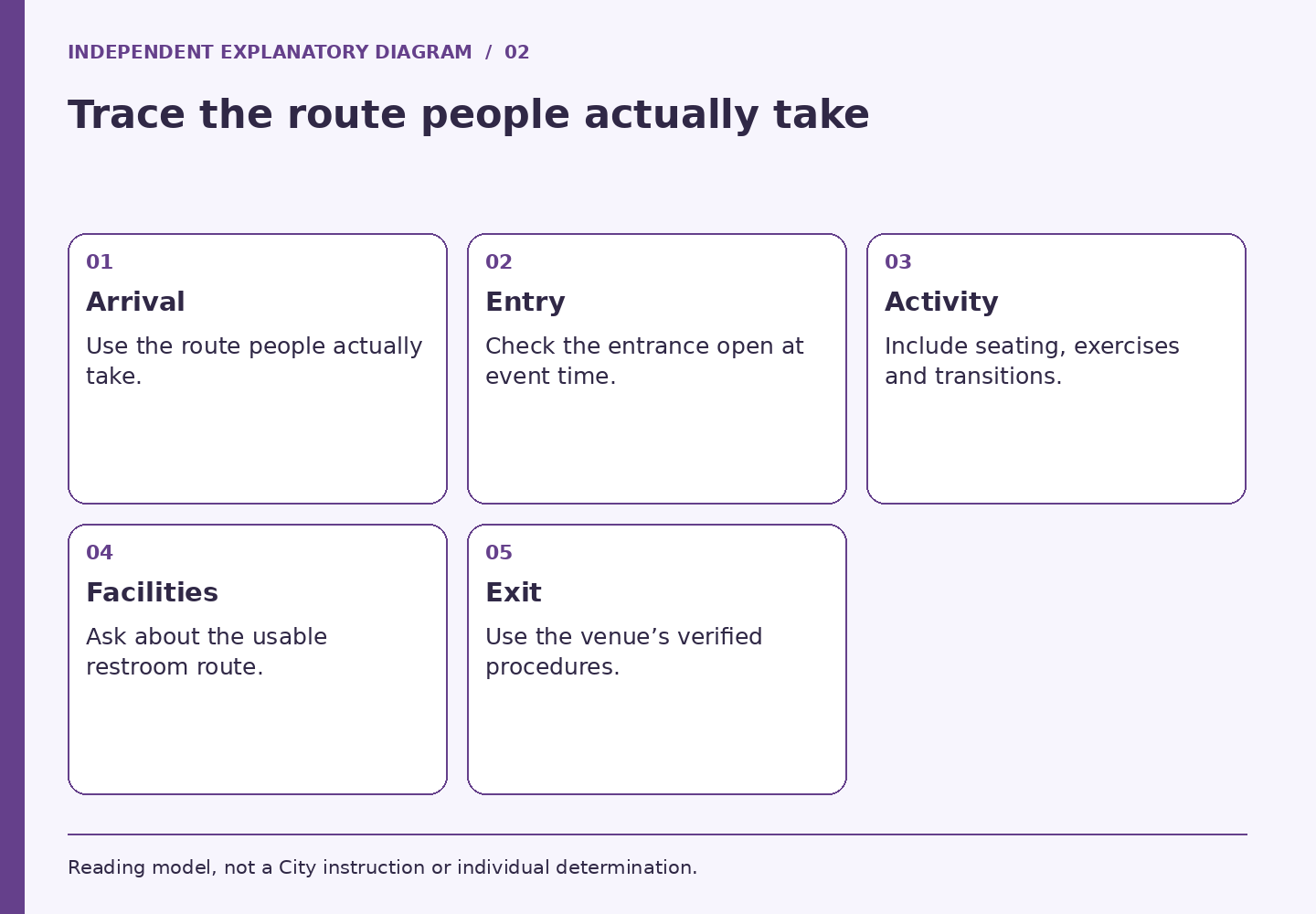
Begin where someone will arrive, rather than at the meeting table. Identify the approach, entrance in use at the event time, reception or security point, path to the room, seating, activity area, restroom route, and exit arrangements. Check the actual event configuration. A space can change when tables, signs, cords, catering, or temporary displays are added.
Record facts precisely. “A cart was blocking the route at 10 a.m.” is an observation. “The building is inaccessible” is a much broader conclusion requiring more evidence. When a measurement or code interpretation is needed, note the question and refer it to the qualified contact. Do not invent technical clearance dimensions from memory.
Check the activity as well as the room
A tour, sign-in station, poster discussion, breakout group, or refreshment table may place demands on people that the seated presentation does not. Ask how each activity works for a participant who cannot use the assumed route or interaction. Avoid designing a second, less useful experience without consulting the responsible accessibility staff and the participant where appropriate.
The DPH event guide includes transportation, emergency planning, logistics, and staffing among its planning categories. Those are useful prompts for assigning ownership. They are not a substitute for the venue's actual emergency procedures or a reason for an untrained organizer to promise a particular rescue method. Massachusetts DPH: Planning Accessible Meetings and Events
Use a three-column observation sheet
For each location, write the observed condition, the participation question, and the person who must answer it. For example: “Evening entrance appears locked; how will attendees use the intended accessible entrance after reception closes; venue manager to confirm.” Another entry could read: “Exercise moves to a different floor; confirm a usable route and transition time; event lead and facilities contact.”
Keep a fourth column for the resolution and its evidence. A phone assurance may need a final on-site check if the event setup changes. Label unresolved items clearly. A blank cell should never mean approved, irrelevant, or forgotten at the same time.
Recheck after setup
In a fictional workshop, the organizer verifies the route a week before the event. On the day, a display stand and check-in queue narrow the approach to the room. The earlier walkthrough was useful, but the setup check discovers a new barrier. The organizer works with the venue owner to correct it before participants arrive.
Save the lessons in a venue note that describes the date and configuration. Do not turn one successful event into a permanent “accessible venue” label. Reuse verified facts, refresh changeable ones, and make clear whom to contact when an attendee reports a problem. The aim is a dependable participation plan, not a perfect-looking checklist.
LOCAL READING AID / NO PERSONAL INPUT
Participation Readiness Map
Choose a work product and the stage of participation. Get a practical plan, focused review questions, and a route to the official source. No personal information is requested.
Read the method without JavaScript
Choose a work product and the stage of participation. Get a practical plan, focused review questions, and a route to the official source. No personal information is requested.
- Boston: Language and Communications Access: Define every participation activity, including questions and follow-up. Assign owners for the venue route, materials, communication arrangements, and live troubleshooting. Check current departmental LCA steps before committing funds.
- Massachusetts Office on Disability: Tips for hosting accessible events and meetings: Test a room question reaching a remote participant and a remote contribution reaching the room. Test shared files, communication supports, and the breakout activity with a participant account. Name who can pause the session and invoke the agreed fallback.
- Massachusetts Office on Disability: Creating accessible digital documents: Confirm the approved audience, required action, version, and owner. Review structure, meaningful links, and non-text content in the editable source. Reopen the exported file and test the actual distribution link.
- Boston: Language Access Information and Services: Separate live conversation needs from written-material needs. Provide the authorized coordinator with the format, activity, timing, and approved materials. Track source edits across every affected language version and delivery format.
- W3C WAI: Understanding Media Alternative (Prerecorded): Inventory what the lesson communicates through speech, sound, and visuals. Review captions for instruction-changing errors and identify visual meaning absent from the audio. Check the player, companion files, version, and support route as one package.
- City of Boston Employee Handbook: Policies and Procedures: Identify whether this is an employee workplace process, a City-program question, or an operational defect. Use the appropriate official channel for personal supporting information. Assign a repair owner and choose a test that matches the reported participation failure.
Choices stay in page memory. No submission, tool storage or URL change. Browser-managed form restoration may behave independently. External source links follow their own policies. Source context checked October 7, 2026.
Sources and scope
Public sources checked October 7, 2026. The exercises and fictional cases are independent editorial work. This publication cannot certify accessibility, decide an accommodation, or act for the City.
- Boston: Disabilities Commission: Architectural, procedural, attitudinal and communication barriers; public referral and architectural-access resources.
- Massachusetts DPH: Planning Accessible Meetings and Events: Planning categories include facility, transportation, timing, communication, staffing and presenters.